Home

UPCOMING EVENTS

New Documentary ” MIS: Human Secret Weapon”
One San Diego Date Only! June 9, 2012
Four screenings: 11am / 1:40pm / 4:20pm / 7pm
$10 advance sale tickets
Junichi Suzuki’s last documentary in a trilogy about World War II Nisei MILITARY INTELLIGENCE SERVICE: Human Secret Weapon is a joint Japan-U.S. documentary about the secret WWII Military Intelligence Service unit which was made up of young Nisei recruited out of the internment camps. They used their Japanese language skills to help defeat the enemy.

GASLAMP 15 THEATRES / 701 Fifth Avenue, Downtown San Diego 92101
Download Flyer for more information


Mailing Address

P.O. Box, 22349 San Diego CA 92192-2349
Telephone Number: (858) 505-9020
Email Address: jahssd@sbcglobal.net

Recent Posts

Historical Lug Labels

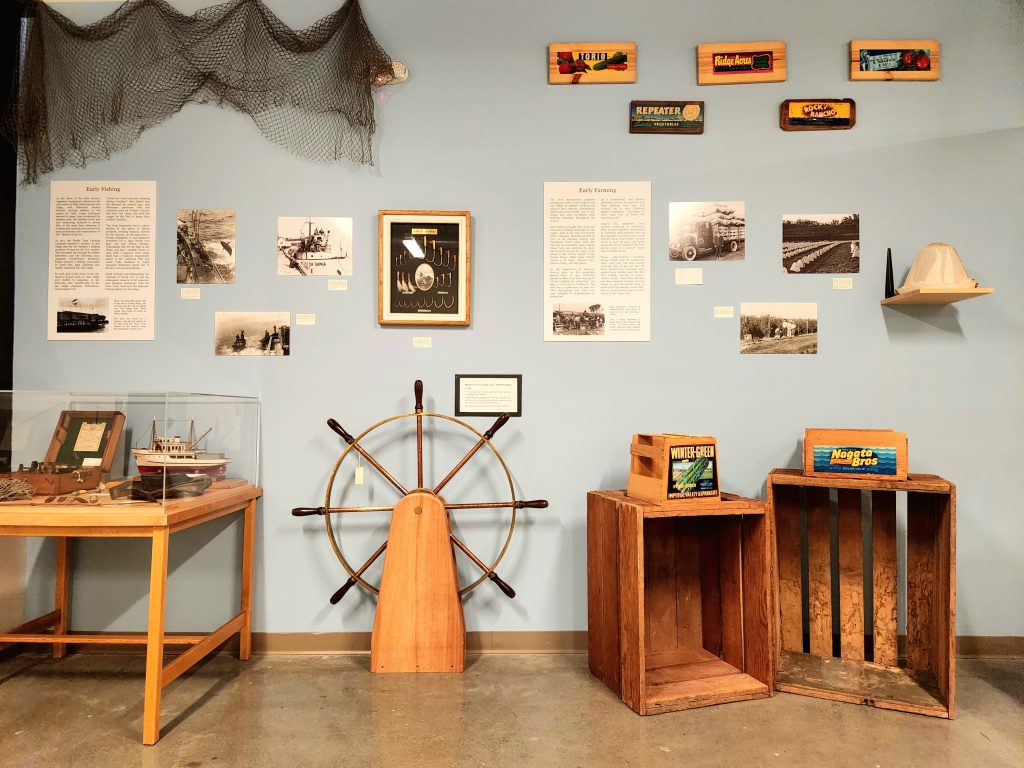
These vegetable lug labels from local farms reflect the significant influence Japanese American farmers have had, and continue to have, on the agricultural development of San Diego.


Segawa-san (1948 – 1958)

Kazuji Segawa in his Ford Coupe at his Spring Valley, California ranch,
c., 1926.

The Segawa-san label was so named for the father, Kazuji and two of his sons, George and Ben. The family began farming in Spring Valley, California in 1918 and later moved to the Tijuana River Valley. Following the family’s World War II removal and detention they began farming again in Palm City, California before moving to the Old Mission Ranch in Mission Valley where the label was brought into use in 1948 by George Segawa. Later his brother Ben joined the operation, making it the Segawa Brothers. On the family’s 160 acres they farmed row crops including romaine, tomatoes, string beans, corn and strawberries. The Segawa brothers closed their operation and moved to Chula Vista, California with the commercialization of Mission Valley in the 1960s.

Yamamoto and Sons (1948 – 2002)

The first label used by this farm was named for the father, Mr. Noboro Yamamoto who began to farm at Fourth Avenue and Naples Street in Chula Vista, California in 1948. In 1962 the label was modified to include Mr. Yamamoto’s four sons Kengo, George, Koichi, and Hisashi. The major crops marketed under the Yamamoto and Sons label were tomatoes and cucumbers. Later the family leased land around the South Bay including a plot on Otay Mesa. With the retirement of George Yamamoto in 2002 the farm ceased operation. Mr. Noboro Yamamoto died in 2002 at the age of 102 years.

Rancho Del Yano (1948 – 1976)

The ranch of Mr. Sakushichi Yano located in Mission Valley about 1928.

This Rancho Del Yano is the label of Tokihira Yano, better known as “Toki.” The Yano family are among the pioneering Nikkei farm families in San Diego County. Initially farming in Mission Valley, the family moved to the Tijuana River Valley in the 1930s. After the World War II removal and detention the family began to farm in Imperial Beach, California where this label was brought into use. The specialty of the Yano family was pole tomatoes.


E.TAH.ME. (1948 – 1976)

Prior to World War II, the Itami family farmed in the Tijuana River Valley and throughout the South Bay. This label was used by Sam and Mary Otsuka Itami between 1948 and 1976 on their ranch located on Palm Avenue near the intersection of Beyer Boulevard. The Itamis farmed specialty crops including celery, tomatoes, cucumbers and squash which were sold directly to the Los Angeles produce markets.

Ridge Acres (1948 – 1986)

Ridge Acres was the label of Isen and Haruko Helen Itami Iguchi. Isen in Japanese means “one sen” so he was widely known as “Penny” Iguchi. The Iguchi ranch was west of Beyer Boulevard and north of Palm Avenue. As the label indicated, the ranch was located on a ridge overlooking the Otay Valley. The Iguchis were among the last of the local farmers to grow celery which at one time had been Chula Vista’s leading agricultural product. Their primary crops were tomatoes and squash.

Yamate’s Best (1949 – 1972)

Following World War II, James Yamate and his wife Yuri Torimaru Yamate came to Chula Vista and began farming. Yuri Yamate’s father Sojiro Torimaru was a pioneer South Bay farmer who had farmed widely in San Diego County. The “Best” used on the label was simply to remind buyers that they could not expect to do better than Yamate-grown vegetables. The family ranch was located on the intersection of Moss and Industrial Avenues in Chula Vista, California. Later other operations were initiated on Anita Street near Broadway and on First Avenue near Orange Avenue. In total the family farmed about twenty-five acres. James’ mother Oshie operated a vegetable stand on the property run on an honor system. She simple left a coffee can with a slot cut in the lid and the customers left the money.
The last crop under this label was spring, 1972. Majors crops were tomatoes and cucumbers.


Torio (1956 – 1970)

This was the label of Charlie and Betty Torio who farmed tomatoes and cucumbers in Chula Vista, California until he left farming and became a gardener.

Oyama Family (1935 – 1976)

Kajiro Oyama and his family outside their Chula Vista home in 1935.

Mr. Kajiro Oyama and his wife Kohide began to farm in Chula Vista in 1935 between J and K Streets paralleling the railroad tracks. Later he grew celery near Third Avenue and K Street. In the late 1930s, Mr. Oyama and his family farmed in the Oceanside area. Following World War II the family returned to Chula Vista to find that their property had been escheated by the State of California. Mr. Oyama’s case was settled by the Supreme Court of the United States in 1948 in his favor. The Oyama’s farmed celery, tomatoes, strawberries and beans.


Kida Farms (1948 – 1976)

Jizaemon Kida arrived in the San Diego area in 1915 and began a lifetime of farming in the East County. He first farmed in El Cajon, California and later in La Mesa, California. The Kida family finally settled in Spring Valley to grow strawberries, Italian squash and other truck vegetables. Following World War II, Mr. Kida’s son Tom farmed the property on Berry Street in Lemon Grove and issued the Kida Farms label.


Encanto Hill – Celery Label (1946 – 1951)

The Encanto Hill label was introduced by Yenkichi Ito following World War II. The Ito family farmed the Encanto area of Southeast San Diego, first growing celery and later tomatoes under the Encanto Hill label. Because of the good quality adobe soil, the celery operation was situated near the intersection of Skyline Drive and 69th Street.
The first celery harvest took place in 1947 and continued until 1952 when the price of city water rose to the point that the growing of celery was no longer an economically viable option. In 1947 Martin Lloyd Ito, a decorated veteran of the 442nd Regimental Combat Team, joined his father and continued to farm in the Encanto area until his retirement in 1969. Today Ito Court just south of Broadway and 65th Street marks the site of the original family ranch.


Spring Valley Pride (1951 – 1968)

Tasaburo and his wife Fusae Mukai were among the earliest Nikkei pioneer farming families in San Diego County. After first farming in El Cajon and La Mesa, the family settled in Spring Valley, California. The Spring Valley Pride label was introduced by two of their sons, Tom and Abe Mukai following World War II. The fifty-acre ranch was located west of Sweetwater Road and south of Palm Avenue in Lemon Grove, California. The primary crops marketed under this label were, tomatoes, corn, strawberries, bell peppers and squash. The Mukai property was taken by the State of California in 1968 as part of an eminent domain action connected with the construction of State Highway 125.


  1. Poston Camp III Site Map Leave a reply
  2. Typical Block Plan Leave a reply
  3. WRA and Justice DEPT Facilities Leave a reply
  4. Source Japanese Immigrants to US 1880-1924 Leave a reply
  5. Relocation Center Capacity Leave a reply
  6. WESDEFCOM Exclusion Zones Leave a reply
  7. Historical Maps Leave a reply
  8. New Year’s Eve Bell Ringing Comments Off
  9. The Sound of Friendship Comments Off